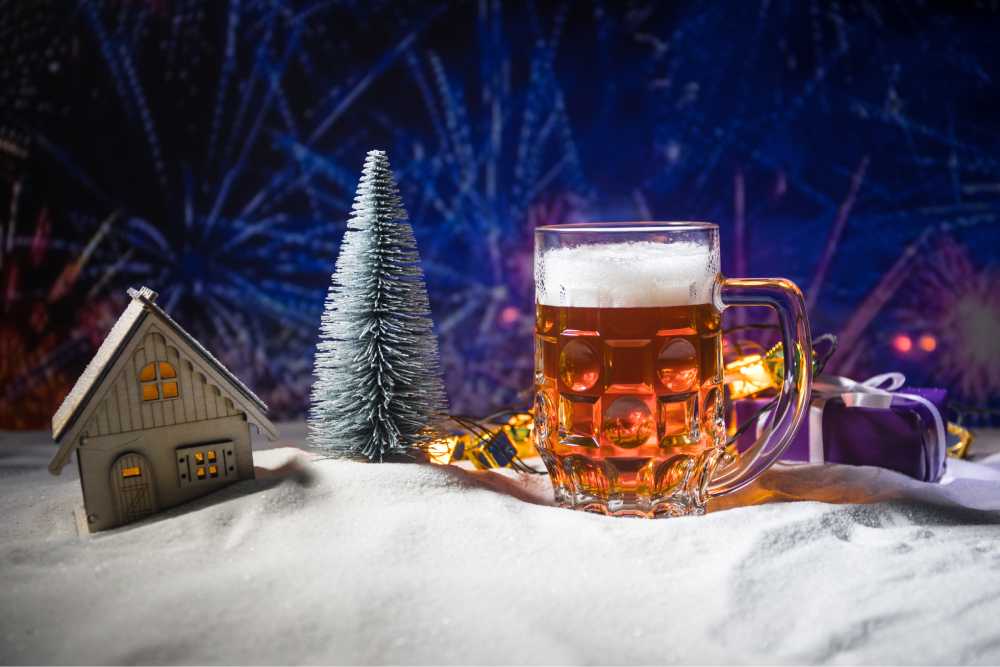
There’s nothing quite like the refreshing, seasonal flavors of a Christmas ale during the holidays. The rich coloring, the taste of seasonal spices and the smooth drinkability make this type of brew a winter favorite. Pour it in a holiday-themed mug, like a Santa boot pint glass, and watch how quickly the holiday spirit spreads. But what makes a Christmas ale a Christmas ale?
The A Head for Profits team loves a good festive beer. Many of our clients serve Christmas-style ales each winter, and we’re lucky enough to try several out when the holidays come around. Whether you’re a seasoned craft beer connoisseur or a casual drinker, holiday ales are a must-try during the holiday season. So, in the spirit of the season, let’s dive into Christmas ales and see why they are the perfect winter beer.
Characteristics of a Christmas Ale
During the winter months, folks tend to move away from light ales and lagers in favor of heavier, darker brews. When it’s cold outside, heavier beers can make you feel warmer. Add in seasonally appropriate flavors, and it’s no wonder why creamy beers like stouts and porters shine during this time of year.
However, the Christmas ale is in its own category. This style of beer is not as dark as other winter favorites, and the profile is much smoother. They have very little or no hoppiness to them, and they don’t taste as bitter as some other winter beers might. This is because they are made to incorporate traditional holiday flavors into the taste profile.
For those unfamiliar with beer styles, it’s helpful to think of Christmas ale as a hybrid between an amber ale and a spiced dessert. Imagine the warm spices of a holiday cookie combined with the comforting richness of a winter drink. Whether you prefer your beer sweet, spicy, or balanced, there’s likely a Christmas beer out there for you.
Christmas in a Keg
Instead of the focus lying on a creamy texture, like you’d see in a stout, a Christmas beer should taste like Christmas in a pint. While there aren’t hard and fast rules for making a holiday ale, there are some notable spices included in most of these holiday brews. Nutmeg, coriander, cloves, and other mulling spices are all common notes. Additionally, brewers may use elements like gingerbread, pine, citrus fruits and cherries to balance out the powerful flavor of the spices.
The creativity of brewers really shines when crafting Christmas ales. Some brewers experiment with aging their ales in bourbon barrels to add an extra layer of depth, while others focus on incorporating locally sourced ingredients like honey or cranberries. These unique twists not only set individual brews apart but also showcase the ingenuity of the craft beer industry.
Christmas ales also use a malt base to create a full-bodied mouthfeel. To add a bit of sweetness, brewers may utilize sweeteners such as molasses or brown sugar since these flavors marry well with the holiday spices in the beer. They also have a higher-than-average ABV, usually between 5-8% thanks to their malty character.
The History of Christmas Ales
Drinking beer at Christmas time or during the holiday season has been around for centuries. Many attribute the practice to the Vikings, who celebrated their own winter holiday known as “Jul.” It was Viking tradition to brew strong, hearty beer for this particular holiday, a tradition that has now spread around the world.
In medieval Europe, monasteries also played a significant role in crafting holiday beers. Monks would brew special ales to celebrate Christmas and other winter feasts, often adding exotic spices and rich malts to create a celebratory drink. These traditions laid the groundwork for the holiday ales we enjoy today.
Today, nearly every country produces some form of holiday or winter beer. The biggest Christmas beer producers are Belgium, Scandinavia, England, and the United States, of course, with countless breweries putting their own spins on the famous brew each year. For example, in Belgium, Christmas ales often feature complex fruity and spicy flavors, while Scandinavian brewers emphasize warming spices and robust malts. In the U.S., craft breweries experiment with bold ingredients to appeal to adventurous palates. Christmas ales start hitting the shelves in November and run through the end of the year in most parts of the world. The limited edition nature of these beers makes them even more coveted, and many people consider the drink to be a part of their own Christmas traditions.
Celebrate the Season with a Christmas Ale
As Christmas time approaches, the team at A Head for Profits is looking forward to all the delicious holiday beverages that are sure to come. We’re grateful that the rich tradition of Christmas beer lives on today and that so many craft breweries are embracing the tradition by creating their own unique seasonal brews.
To truly savor the experience of Christmas ales, consider pairing them with holiday foods. These brews go wonderfully with roasted meats, savory pies, or even festive desserts like gingerbread cookies or fruitcake. The malty sweetness and spice notes often complement the rich flavors of holiday dishes, creating a match made in culinary heaven.
We hope this guide on Christmas ale inspires you to try out all the delicious brews your local brewers are making this holiday season. What better way to celebrate the season than supporting your hometown hop masters? And if your own bar or brewery needs any assistance with your draft equipment this winter, A Head for Profits has you covered. Happy holidays, and long live the Christmas ale!