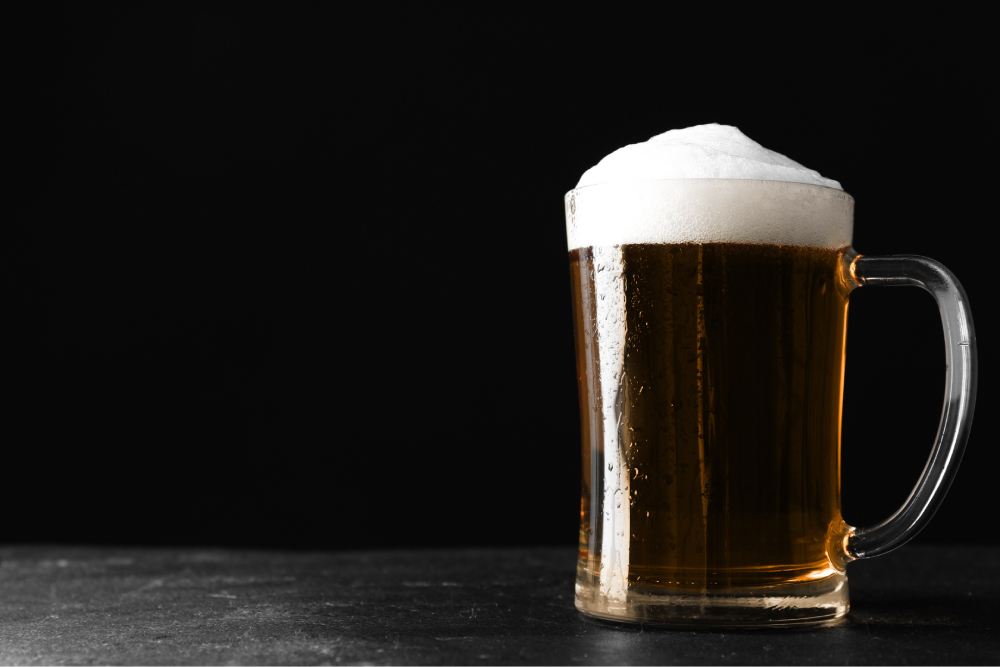
Ever wondered why some beers pour with a perfect, sudsy beer head while others seem to struggle? The answer lies not just in the brewing process but also in the fascinating world of bubble science. Let’s explore how a bit of fiber could revolutionize the way we enjoy our favorite stouts, bringing a new level of sudsiness to our pours.
The Bubble Basics
Most of us are familiar with the delightful hiss and fizz of opening a can of beer. That satisfying sound comes from carbon dioxide (CO2), which gives beer its characteristic bubbles and foam. But when it comes to stouts, there’s a twist: these rich, dark beers rely on nitrogen (N2) rather than CO2. Nitrogen provides a creamier mouthfeel and a more stable, longer-lasting head, but it doesn’t dissolve as easily or form bubbles as quickly as CO2. This is why stouts like Guinness need a little extra help to achieve that perfect pour.
The Science Behind the Foam
Bubbles in beer don’t just appear out of nowhere—they need a starting point, known as a nucleation site. For a long time, it was believed that tiny imperfections in the glass provided these sites. However, recent studies have shown that the real heroes of bubble formation are actually tiny fibers, often made of cellulose, which can cling to the sides of the glass.
These fibers, which can come from dust in the air or cloths used to wipe down glasses, trap pockets of gas that serve as the launching pad for bubbles. When beer is poured, these gas pockets release CO2 or N2, creating lovely streams of bubbles that rise to the top and form the classic, sudsy beer head.
Stout’s Slow Bubble Show
Here’s where it gets interesting: while lighter beers and carbonated beverages bubble up quickly, stouts take their sweet time. The same fibrous material that works wonders for champagne and pale ales is at play in stouts, but the bubble formation process is much slower. In fact, it takes about 1.28 seconds for a cellulose fiber to trigger a bubble in a stout, compared to just 0.079 seconds in a typical carbonated drink.
A Fiber-Forward Future
So, how can we use this bubble science to our advantage? One intriguing idea is to line beer cans with a material similar to a coffee filter. This fibrous lining could help unleash the bubbles in stouts more effectively, eliminating the need for the nitrogen gas widget currently used in cans of Guinness.
Imagine pouring a stout that consistently delivers a beautiful, frothy head without any extra gadgets. By adding a coating of dense fibers inside the can’s upper lip, brewers could ensure a perfect pour of sudsy beer every time. In fact, early experiments with pouring stout onto a coffee filter showed promising results, with bubbles forming quickly on the fibrous material.
Raising the Bar on Sudsy Beer
The next time you pour a stout and admire its creamy head, remember the science and innovation that went into creating that perfect pour. The world of beer is constantly evolving, and who knows? Maybe the future of sudsy beer lies in something as simple as a bit of fiber.
So, next time you’re savoring a smooth, frothy stout, take a moment to appreciate the tiny fibers making it all possible. And don’t forget to raise a glass to the brilliant minds who keep pushing the boundaries of beer enjoyment!